What is RFID technology?
How does radio identification work in practice?
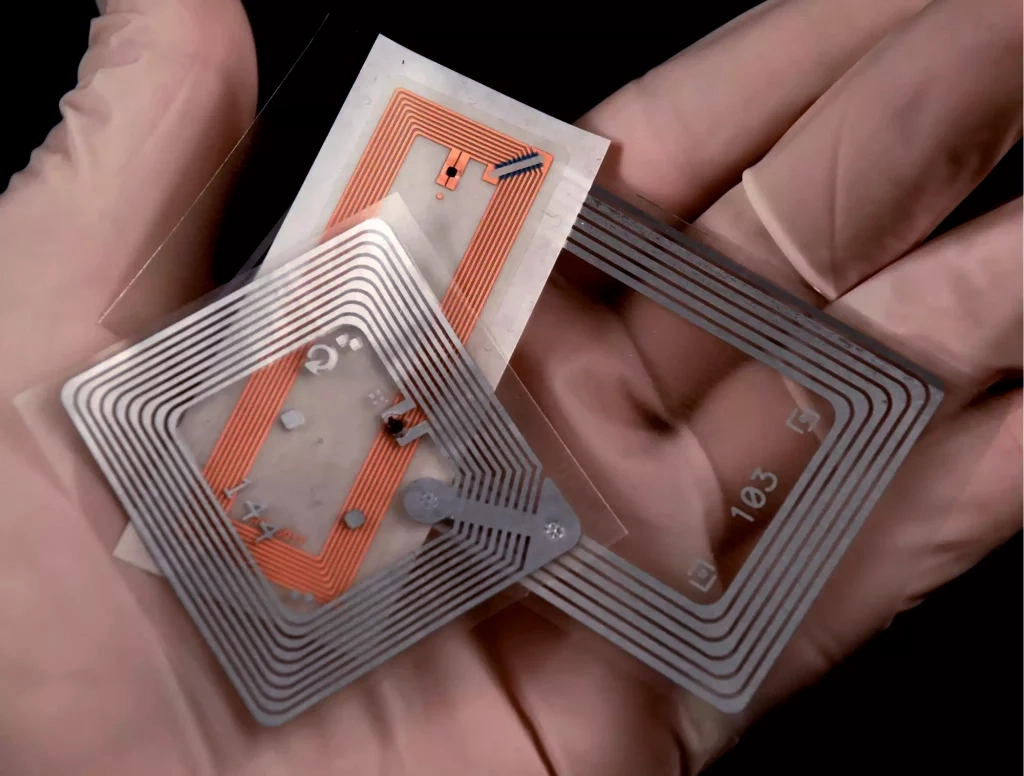
Behind the acronym RFID lies a simple concept: Radio Frequency Identification. The idea is to combine an RFID tag and a reader, enabling information to be transmitted remotely. In simple terms, the tag takes the form of a chip containing data, and a transmitter antenna that can be fixed or mobile. It uses radio waves to transmit its contents to the reader, enabling the identification of objects, assets, animals or even people.

RFID technology in everyday life
Although we may not be aware of it, we are exposed to RFID technology on a daily basis. This is the case when we use contactless payment, when we visit Decathlon, or when we use our company badges.
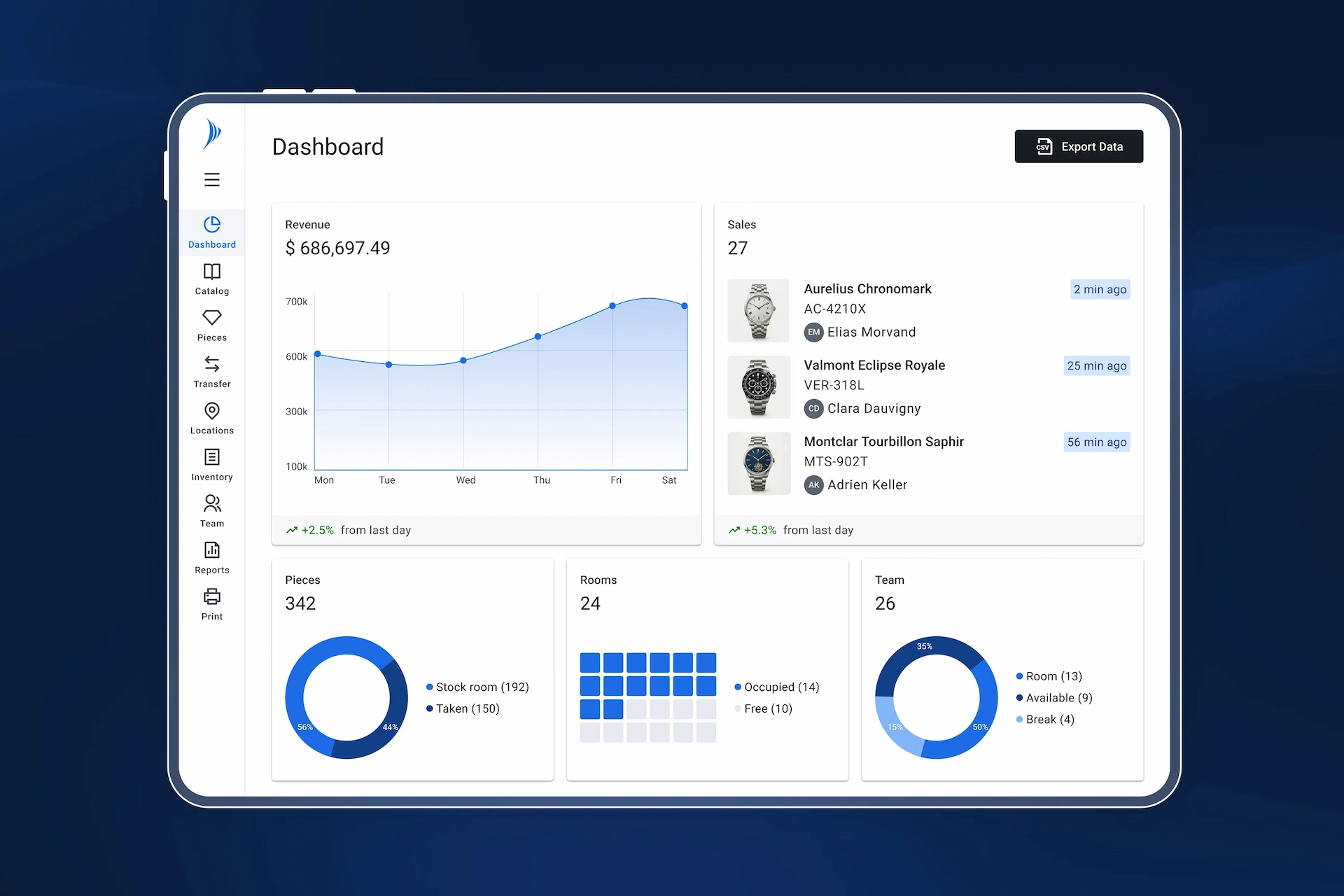
But that's not all: RFID-based tracking is also widely used by professionals in the luxury goods industry, as well as in factories and warehouses, particularly for asset tracking.
Advantages and disadvantages of RFID
The advantages of using it
RFID systems have brought a breath of fresh air to the world of identification, revolutionizing the way we manage our data. While barcodes and the more recent QR codes have long been the benchmark technologies in this field, RFID is proving to be far more effective and efficient.
So we like radio frequency identification for :
- Simplicity of detection: this technology requires no visual scanning. Unlike more traditional technologies, the RFID tag doesn't need to be seen by a reader. It simply needs to be within a reasonable reading distance to be identified. A significant time-saver for your inventories!
- Mass data management: a load of a hundred boxes passing through an RFID portal can be instantly detected by the system, saving you precious scanning time.
- Accuracy: While not all RFID systems are accurate, some can pinpoint tags on objects or people to within a meter. It's up to you to find the best balance between price and accuracy!
- Flexibility: Yes, RFID can be used in a wide variety of sectors and applications! It is therefore extremely popular in hospitals, retirement homes, warehouses, factories, public transport, payment systems and anti-theft devices.
- Hisdurability: RFID tags are robust and able to withstand many environmental conditions, making them suitable for outdoor use too.
- Its ability to enhance the customer experience: As companies strive for greater flexibility, RFID technology is a real ally. Thanks to RFID, companies not only save valuable time, but are also more reactive and able to make quick decisions, for example in the event of low stock levels. Improved customer satisfaction is the logical consequence of all these advantages.
Some limitations to note
As we have seen, RFID makes it possible to manage large quantities of data, over varying distances, securely and without complexity. However, such technology can also present limitations if not implemented properly.
For example:
- Interference: This poses a risk to radio identification, as signals can be disrupted by metals or liquids. Fortunately, interference is not systematic and depends on your environment. To avoid these pitfalls, it's essential to contact experts who can advise and guide you in your choice of solution.
- Range issues: If your RFID system isn't properly dimensioned, distance constraints can hamper its operation. When choosing your solution, you need to define not only the accuracy you require, but also the maximum distance between tags and RFID readers.
- Complexity of implementation: One thing is certain: deploying RFID technology in your company is far from simple on a large scale. It requires the intervention of professionals like Solid Solutions in Identification, both to analyze and plan the location of elements, and to arrange them and make them functional.
- Maintenance: To keep your system running at peak performance, maintenance may be essential. This is particularly the case for active RFID chips, where the battery will need changing after a few years.
- Variable cost: Depending on the RFID technology you're considering, your budget can vary greatly. While passive chips are very affordable, their reading distance is reduced, and their storage capacity is limited. Conversely, you can opt for high-performance, more expensive active chips, whose lifespan is shortened by that of the built-in battery.
In short, it's all a question of balance!
RFID applications for professionals
The use of RFID technology has spread to many sectors, such as:
There are many applications, and the types of RFID technology employed vary according to the use case. Detection over distances ranging from a few centimeters to several hundred meters, thanks to a wide range of chips available on the market, whether active or passive... Anything is possible. Here's what you need to know about the particularities of these different systems!
The different RFID systems
Passive RFID
Passive RFID chips are the most standardized and least expensive on the market. As their name suggests, they do not emit waves spontaneously, but are activated only when they receive signals from readers. They are therefore practical and have an optimal lifespan, since they do not require batteries!
Among their main features, we should note:
- A range of up to fifteen meters, depending on the size of the chip.
- Low cost, due to the absence of a battery and storage capacity similar to 1D/2D code.
- Their compact size makes them adaptable to many situations.
- A long service life, lasting decades.
Examples of use: Passive RFID is most commonly used in warehouses and factories to facilitate logistics, inventory taking, and stock management. It is also used by companies seeking to improve asset management, in anti-theft systems in stores, and to track items in libraries.
Active RFID
Unlike passive RFID, active chips havetheir own power source in the form of a battery. They are characterized in particular by:
- A significant range, which can exceed several tens of meters.
- Extended storage capacity.
- A lifespan of around 5 years.
- The need for potential maintenance.
- Higher cost than passive RFID.
Examples of use: Active RFID tags are extremely strategic, as they can detect people and objects over long distances. As such, they are used to track vehicles, individuals, and heavy equipment on construction sites and other industrial sites. They are also practical in difficult conditions, including oil rigs and conflict zones.
Semi-passive RFID
Semi-passive RFID (or semi-active, depending on your point of view) combines the characteristics of the two RFID technologies we have just presented. Like the active version, it has a battery. However, it works like a passive tag, only activating when it receives a signal from the reader. Furthermore, as the battery does not power the circuit continuously but only at specific intervals, the system has a fairly long service life. Here is what you need to remember about this technology:
- Its range can reach up to 50 meters.
- Its lifespan is between that of active and passive chips.
- It is more affordable than the active versions.
Examples of use: Semi-passive RFID is used in particular in supply chains to track products, perishable goods, and medicines. It can also be used to check the temperature of goods being transported to ensure that the cold chain is maintained. Similarly, it is a powerful ally for your fleet management, allowing you to locate vehicles equipped with chips.
The importance of RFID frequencies
The concept of RFID is intrinsically linked to that of frequencies. Each system is characterized by specific ranges of values, which involve differences in range.
Here is a table summarizing the key information about RFID technology frequencies.
Components and operation of RFID technology
RFID technology relies on communication between different elements, namely the RFID tag and the reader. Let's take a closer look at these components.
RFID tags
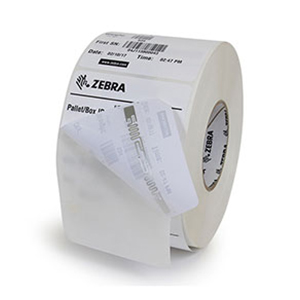
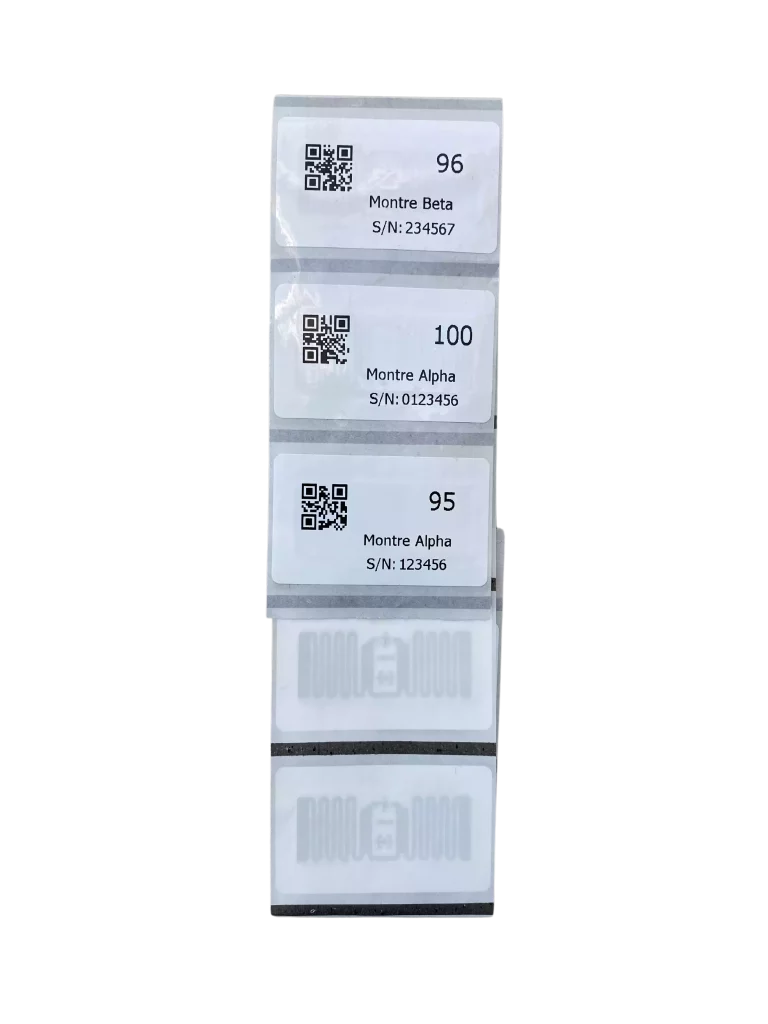
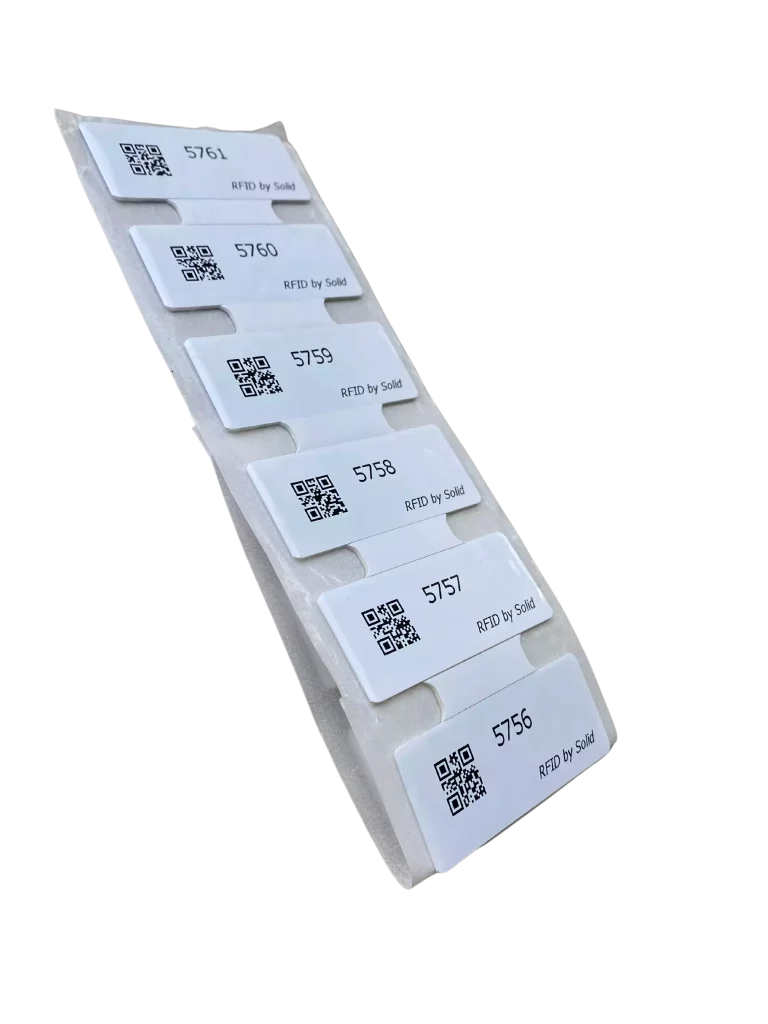
RFID tags take the form ofa chip containing an integrated circuit on which various pieces of information are stored. Serial number, date, price, security data, traceability information, etc. They also include an antenna and, for active and semi-active tags, a battery. The combination of the chip and the antenna is called an inlay. Only once the inlay is associated with an identifier do we refer to it as a tag.
These RFID tags are configured usinga unique identifier, allowing them to be distinguished from others. Of course, depending on your needs, there are also special chips available. Some can be designed to measure temperatures, others can be made to withstand extreme conditions, etc.
RFID antennas
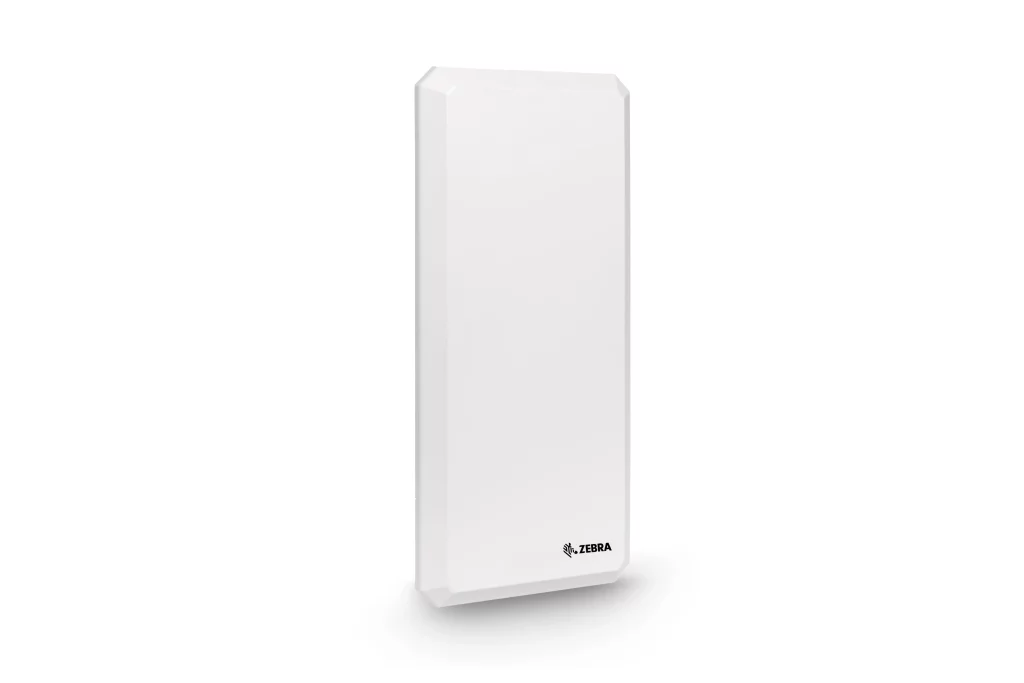
As mentioned above, RFID antennas act as intermediaries with readers, enabling remote activation of chips. The waves they emit are received by tags, which then return radio signals. Although they are not capable of reading and processing information, they are ideal for extending the range of chips, which have a limited transmission distance. Depending on their size and positioning, they can be used to build high-performance RFID systems.
RFID readers
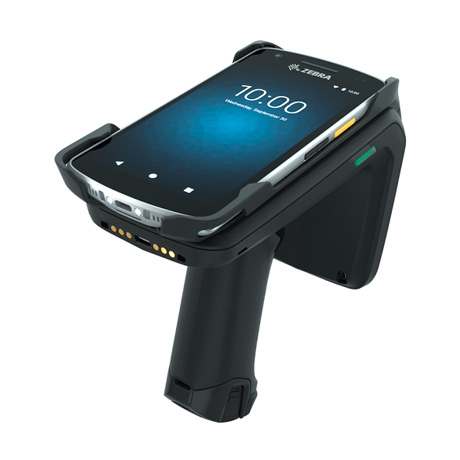
While RFID tags contain information, this information is only useful if it can be read. This is precisely the role of readers, whose job is to convert radio waves into digital data that can be understood and used by your software. Fixed or portable versions, in the form of terminals, scanners, or even gates: it all depends on your objectives and the system you want to implement.
Of course, tags, antennas, and readers are not an end in themselves. Whether you work in a production plant, warehouse, luxury store, or hospital, your goal is to be able to process the data captured by RFID technology. This is where your software comes in.
.webp)
The software
RFID software is essential for interpreting the data captured by readers. It transforms RFID signals into actionable information and integrates them into existing data management systems.
In these cases, you have several options. You can opt for a customized software solution. Or, if you don't want yet another software program, middleware can be developed. This middleware will act as a gateway between the data received by the readers and your ERP, WMS, LIMS, etc. It will transform the information received so that you can use it directly from your existing solution.
How can you integrate RFID technology into your business?
1. We assess your needs.
First, we learn about your company's challenges to determine how RFID technology can improve your daily operations. From asset tracking to optimizing your production lines, inventory management, and locating people or vehicles, we consider all possibilities and support you in implementing the best possible strategy.
2. We guide you toward the most effective RFID technology .
As we have seen, the diversity of chips, frequencies, and hardware makes choosing the right components a complex task. As experts in this field, we are here to guide you toward the systems best suited to your needs and your budget.
3. We design a complete RFID system.
Once your needs have been identified and the right technology selected, we take care of designing the solution in the field. We define the different flows to be traced, resulting in a network that fits perfectly with the existing infrastructure.
4. We set up and test the network.
Once we have confirmed the project plan, the selection of components, and their layout with you, we can move on to implementation. This major rollout will then be followed by pilot tests and technical adjustments to ensure that the system is working perfectly.
5. We train and raise awareness among your teams.
As you know, integrating new technologies into a business can only be successful if there is strong change management. We offer comprehensive training courses to help your teams become familiar with RFID. We also devote a significant part of this phase to data security, which is essential when dealing with information.
6. We maintain your systems continuously.
Because your RFID systems need to evolve with your business, we ensure that they continuously meet your needs and maintain their original efficiency. To this end, we offer maintenance for your technologies and troubleshooting in the event of any problems.
Your questions about RFID
What is the difference between RFID and NFC chips?
- NFC (Near Field Communication) is a subcategory of RFID, operating at high frequency.
- It enables secure two-way communication over a short distance (≤10 cm).
- Common uses:
- Mobile/contactless payment
- Data transfer between devices
- Accurate geolocation in-store
How is the security of RFID systems ensured?
- RFID data can be intercepted without protection by an unauthorized reader.
- Security solutions to be implemented:
- Use tag encryption software
- Avoid obsolete hardware (often vulnerable)
- Train teams on the risks associated with RFID
Now that you know more about RFID technology technology and its challenges, don't hesitate to make this choice for your business. It will not only help you improve performance, but also increase customer satisfaction. How do you get started? It's easy: contact us to discuss your project!