Health

Tracking patient journey times in outpatient surgery – RFID technology serving the medical field

December 1, 2022

MV Santé is a private company that has specialized in outpatient surgery for nearly 20 years. With four clinics across French-speaking Switzerland and 15 operating rooms, they perform around 25,000 operations per year in all surgical fields. MV Santé has developed its own system called "e-chir" which supports and digitizes its procedures and collects data in order to continuously improve its processes and the use of its resources. MV Santé is a private company that has specialized in outpatient surgery for nearly 20 years. With four clinics across French-speaking Switzerland and 15 operating rooms, they perform around 25,000 operations per year in all surgical fields. MV Santé has developed its own system called "e-chir" which supports and digitizes its procedures and collects data in order to continuously improve its processes and the use of its resources. As almost all of its services are provided on an outpatient basis, MV Santé is essentially subject to the TARMED tariff. This tariff is regularly revised downwards, forcing the company to optimize its procedures, work organization, and resources.

Needs

To optimize the allocation of its operating rooms and resources, as well as the patient experience, MV Santé needed to know very precisely how long its rooms were occupied throughout the patient journey within its clinics. For example, the time the operating room was occupied from the moment the patient entered until they left.Already a user of our SolCare solution (a solution for clinic and hospital logistics), linked to its Opale ordering system, MV Santé approached us to find an automatic time-tracking solution that did not depend on the actions of its staff and could be integrated into its e-chir system.

The solution

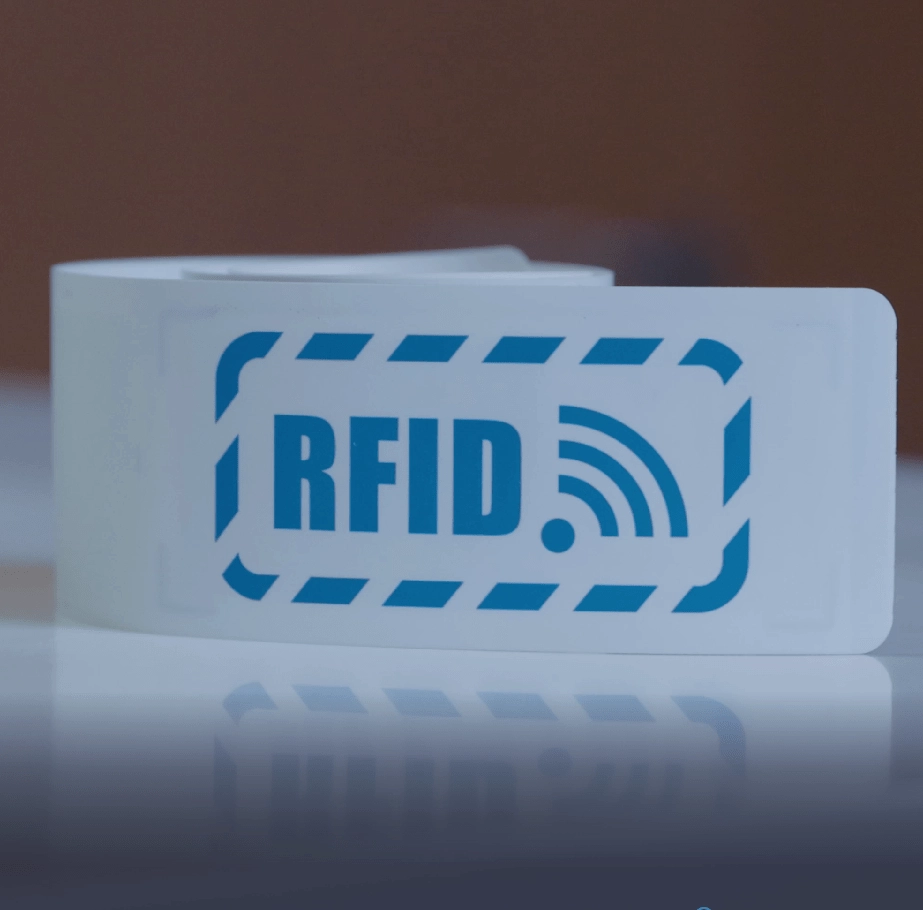
The SolMed solution is very simple. It allows highly accurate time data to be collected at various points along the patient's journey, with the aim of providing comprehensive information in real time. To do this, patients are given wristbands containing an RFID chip. RFID antennas and readers are placed at strategic locations along the patient's journey to detect when the wristbands pass by. The wristbands are printed with patient data upon arrival at the clinic and then placed on the patient's arm. Designed exclusively for this solution by Sato, the wristbands are hypoallergenic and very comfortable to ensure the patient's complete well-being.As patients pass through the various rooms (reception, changing room, anesthesia, operating room, recovery room, etc.), the antennas automatically pick up the signals from the wristbands and send them to the RFID reader. Using Solid's "SolWaves" middleware, the reader filters and analyzes the signals and sends them back to the "e-chir" system. The e-chir algorithms can then calculate and dispatch operating slots to optimize the use of its rooms. When the patient leaves, the staff stops the RFID bracelet from transmitting and the total time is recorded. E-chir and SolMed are obviously transferable to inpatient surgery and allow all operating rooms to be managed like a business within healthcare facilities and hospitals.

The advantages

The various advantages of this solution:

  • MV Santé knows where its patients are at all times and how much time remains before the next stage.
  • The allocation of operating rooms is optimized, as are internal resources.
  • The patient flow is well defined.
  • Billing is done automatically and at very specific times.

Technology

Although RFID technology does not actually allow for geolocation accurate to within a meter, it is the best alternative for the following reasons:

  1. RFID technology requires far fewer antennas than Bluetooth communication.2) An RFID wristband does not require a connection, so no batteries are needed. It is disposable and affordable under the TARMED pricing system. Currently, a Bluetooth chip is much more expensive and is not disposable, requiring significant handling by staff for recharging or disinfection.3) The requirement is for zone-to-zone location tracking with precise passage times, rather than geolocation accurate to within a meter. RFID technology fully meets these criteria.
  2. An RFID bracelet does not require a connection, so no batteries are needed. It is disposable and affordable at the TARMED rate. Currently, a Bluetooth chip is much more expensive and is not disposable, so it requires a lot of handling by staff for recharging or disinfection.
  3. The requirement is zone-by-zone location tracking with precise transit times, rather than geolocation accurate to within a meter. RFID technology fully meets these criteria.

We supported MV Santé throughout this project, from choosing the technology to installing the solution. Our expertise in traceability and digital solutions enabled us to develop the "patient tracking" solution. Being located in Geneva, the proximity, availability, and flexibility of our teams were also an asset in monitoring this project.

Let's discuss your traceability challenges

Our experts are on hand to help you identify the solution best suited to your business challenges.

Join the demanding companies who trust Solid to track and optimize their assets and products on a daily basis.

Other client cases

Health

Tracking patient journey times in outpatient surgery – RFID technology serving the medical field

MV Santé is a private company that has specialized in outpatient surgery for nearly 20 years. With four clinics across French-speaking Switzerland and 15 operating rooms, they perform around 25,000 operations per year in all surgical fields. MV Santé has developed its own system called "e-chir" which supports and digitizes its procedures and collects data in order to continuously improve its processes and the use of its resources. MV Santé is a private company that has specialized in outpatient surgery for nearly 20 years. With four clinics across French-speaking Switzerland and 15 operating rooms, they perform around 25,000 operations per year in all surgical fields. MV Santé has developed its own system called "e-chir" which supports and digitizes its procedures and collects data in order to continuously improve its processes and the use of its resources. As almost all of its services are provided on an outpatient basis, MV Santé is essentially subject to the TARMED tariff. This tariff is regularly revised downwards, forcing the company to optimize its procedures, work organization, and resources.
Pharma & Chemicals

How can sample tracking be automated in the laboratory?

In 2019, two Swiss pharmaceutical and biotechnology companies contacted us to optimize and automate the tracking of their samples. Due to strict regulations in these industries, they had not begun digitization as in other sectors and needed a change. The Solid team rose to the challenge!
Luxury

Tracking items based on events – RFID technology at the service of luxury goods

In 2014, a Swiss watch manufacturer, already a long-standing customer, contacted us about a need they wanted to address: tracking watches at trade shows and events. We offered them an effective and completely innovative concept: tracking items using RFID technology. That's how we got started in event traceability. A year later, a French fine jewelry and watchmaking company expressed keen interest in the same solution. The first version met our customers' basic needs but was not very user-friendly. With a fresh perspective, Solid drafted new specifications and improved the solution, both functionally and in terms of processes, creating SolShow. Over time, other companies in the luxury sector became interested in SolShow, often requesting upgrades that benefit companies that have already adopted the product. This has enabled us to develop a comprehensive and user-friendly solution in 2021 that meets the desires and needs of the luxury market.