.webp)
The context
In laboratories, it is very important to know where a sample is located and to have a history of its movements to ensure that storage complies with regulations and processes.
Consequently, moving a sample through a plant (from production to quality control) involves a high level of manual tasks and manual entry of information into paper records.
Manual tasks
Laboratory technicians were required to:
- Find the sample (no actual inventory was available)
- Move it from one place to another and check that the temperature of the sample matches that of the refrigerator.
- Enter the information in a paper register
- Contact other departments to inform them that the sample is ready.
- Enter the information into the LIMS system
- Etc.
And it didn't stop there. The unpleasant work was not limited to the lab technician but affected the entire company:
- The sample manager must compile this information to obtain an overview of the status of the samples and verify that the samples have not been left in the refrigerator for too long.
- The archivist had to file the paper journal in the archives so that it could be quickly retrieved during audits.
- And so on...
All these steps took time but also had limitations: no real-time visibility, limited access to information, wasted time, limited control, potential for human error, limited access to historical data, and an unrewarding task for the operator.
In summary, they were looking for a solution to automate sample tracking. A solution that had to:
- Monitor the movements of technicians in laboratories and perform various checks
- Share real information
- Communicate with other systems (MES, LIMS)
- Comply with GMP regulations
The solution
The solution we developed for our client consists of three elements.
Tracking and identification technology
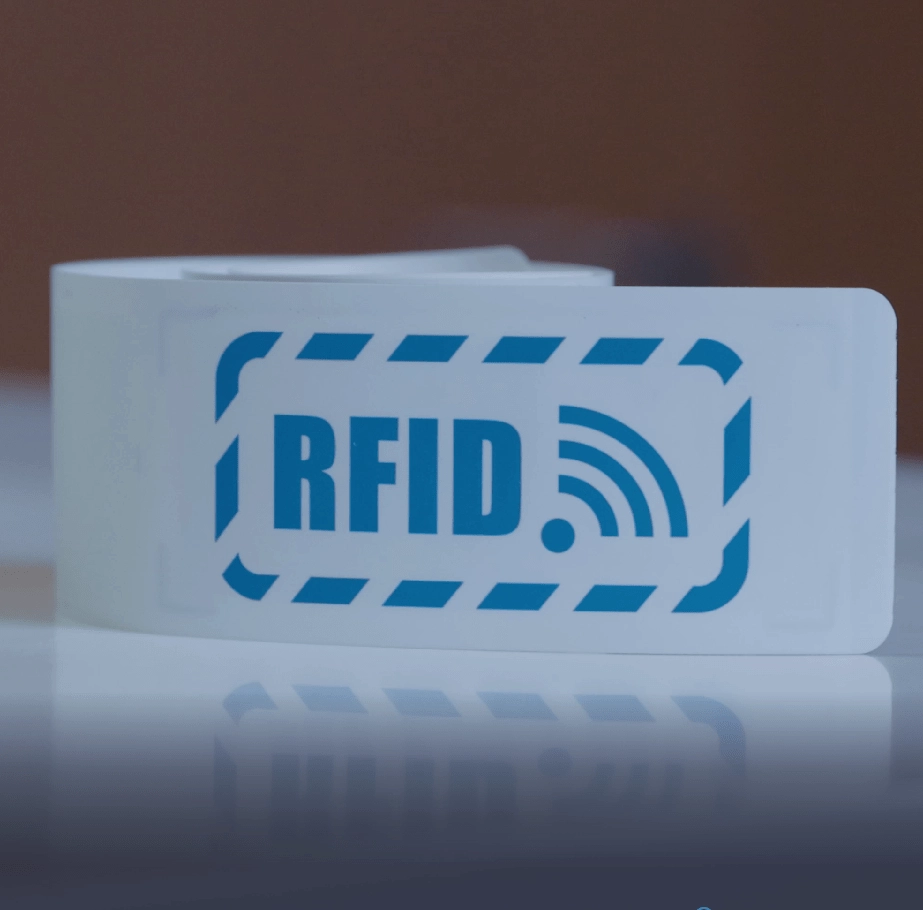
Due to the size of the samples, their number, and the transportation process, we decided to equip the samples with RFID chips. Radio frequency identification is a wireless system consisting of two elements: tags and readers. The reader is a device equipped with one or more antennas that emit radio waves and receive signals in return from the RFID tag.
We replace their basic labels with RFID labels (of the same size) that can be read automatically. RFID offers several advantages, such as the ability to scan without seeing the labels and multiple, rapid readings (81 samples in 20 seconds).
A mobile solution for operational action
We have equipped the departments with an application on Android PDAs. Users use it to carry out their daily tasks (transfer, destruction, aliquoting, etc.). The application performs the various necessary checks, such as the correct location of the source, the correct temperature of the refrigerator, etc., and sends all the information to a database (who, when, what, from where to where, etc.).
A back-office solution
It displays all information from the field and makes it accessible to everyone at any time. The back office replaces logbooks and provides new features (alerts, tracking, and reports). If a user needs information about a sample, they can obtain it in seconds. It is no longer necessary to archive logbooks.
Benefits of the solution
Implementing our solution enables:
- Real-time visibility for everyone
- Automated processes with fewer errors
- Better control of movements and process rules
- Faster action, increased productivity
- Activity reporting and monitoring
- Enhancing the user experience
As mentioned earlier, SolSample was designed and developed for the needs of the biotechnology, pharmaceutical, and food industries. It meets the security, regulatory, and process requirements of these industries. This solution is the result of 25 years of experience in identification and was born out of a joint effort between a partnership and Solid.
Every detail, issue, and inefficiency was carefully analyzed and resolved during numerous discussions with the partner. This solution is simple and effective and was developed to be customizable for each industry while complying with their standards.